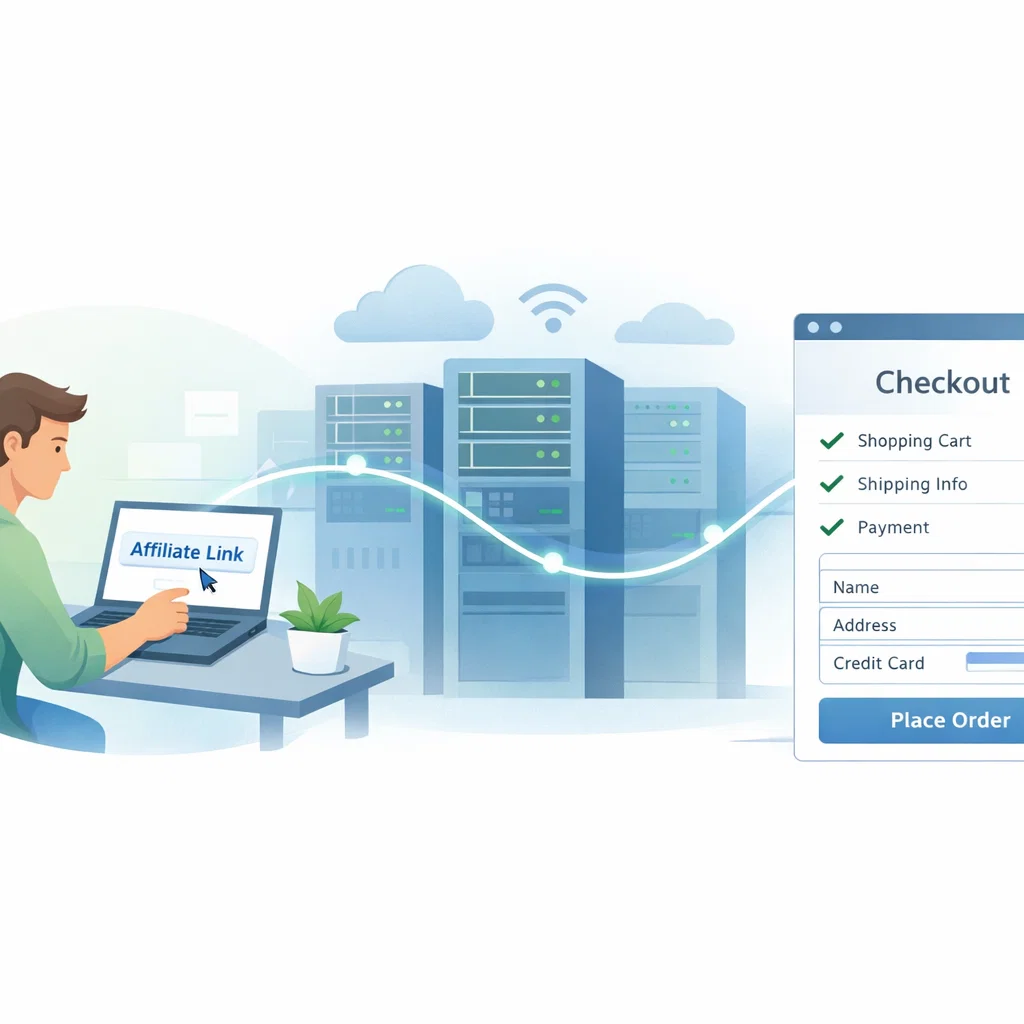
Affiliate marketing often gets explained in very simple terms. Share a link, someone clicks it, you earn a commission. While that description is not wrong, it leaves out the part that most beginners never really understand. The part that explains why some people earn consistently and others struggle even with traffic.
Behind every affiliate link is a small but important technical system. Once you understand how it works, a lot of confusion disappears. You stop guessing, stop relying on luck, and start making better decisions about traffic, content, and follow up.
Let’s break it down in plain language.
What an Affiliate Link Really Is
At its core, an affiliate link is just a normal web link with extra tracking information attached to it.
When you join an affiliate program, you are given a unique identifier. This identifier tells the merchant or platform that you are the one who referred a visitor.
A typical affiliate link contains:
- The destination page URL
- An affiliate ID or username
- Sometimes additional tracking parameters
When someone clicks your link, that identifier travels with them.
Nothing magical happens yet. No money is made at this stage. The system is simply recording that a click came from you.
What Happens the Moment Someone Clicks
When a visitor clicks your affiliate link, three things usually happen behind the scenes:
First, the visitor is redirected through a tracking server. This server belongs to the affiliate network or the merchant.
Second, a small piece of data called a cookie may be placed in the visitor’s browser. This cookie stores information such as your affiliate ID and the time of the click.
Third, the visitor is sent to the final page they expected to see. This could be a sales page, a webinar registration, or a product checkout.
All of this happens in a fraction of a second.
From the visitor’s perspective, they just clicked a link and landed on a page. From the system’s perspective, a record has been created.
Cookies and Tracking Windows Explained Simply
Cookies are often misunderstood and sometimes feared. In affiliate marketing, they are simply a way to remember who referred a visitor.
Each program has a tracking window. This is the amount of time the cookie remains valid.
For example:
- A 24 hour cookie means you get credit only if the purchase happens within 24 hours
- A 30 day cookie means you can earn commission if the visitor buys anytime within 30 days
- Some programs use longer or even lifetime tracking
If the visitor clears cookies, uses a different device, or clicks another affiliate’s link later, your tracking may be lost. This is one reason relying on direct linking alone is risky.
Why Direct Linking Is Fragile
Many beginners send traffic straight to affiliate offers. This works sometimes, but it has major weaknesses.
If the visitor does not buy immediately:
- You lose the chance to follow up
- The cookie may expire
- Another affiliate may overwrite your tracking
- The visitor may forget who you were
This is why experienced affiliates focus on capturing the email address first. When you own the relationship, you are no longer dependent on a single click or a short cookie window.
How Email Fits Into the Picture
When you send traffic to an opt in page before the affiliate offer, the system changes completely.
Now the flow looks like this:
- Visitor clicks your content or ad
- Visitor joins your email list
- You follow up with value and education
- Affiliate links are introduced naturally over time
Behind the scenes, the affiliate links still work the same way. The difference is that you get multiple chances to earn from the same person instead of one.
Email also allows you to:
- Explain the product properly
- Build trust before promoting
- Recommend tools when the timing makes sense
- Reduce pressure on a single page or offer
Tracking Beyond the Affiliate Network
Most serious affiliates do not rely only on the network’s tracking.
They use additional tools to track:
- Which traffic source sent the click
- Which email generated the sale
- Which page performed best
- Which offer converts for which audience
This is done through link trackers, UTM parameters, and dashboards. These tools do not change how affiliate links work. They simply give you better visibility.
The goal is clarity, not complexity.
What the Merchant Sees
On the merchant’s side, affiliate links help answer important questions:
- Where did this customer come from
- Which partner referred them
- What commission is owed
- What traffic sources perform best
If everything matches up correctly, the commission is credited to your account. Payouts are then processed according to the program’s schedule and rules.
If something breaks in the chain, such as lost cookies or blocked tracking, commissions can be lost. This is another reason why system design matters more than volume.
Common Myths About Affiliate Links
One common myth is that affiliate links stop working if you share them too much. They do not.
Another myth is that shortening links always hurts tracking. It does not, as long as the redirect is clean.
A more dangerous myth is believing that affiliate links alone create income. They do not. They are just connectors. The real work happens in trust, relevance, and follow up.
Why Understanding This Matters Long Term
When you understand how affiliate links work behind the scenes, you stop chasing shortcuts.
You start focusing on:
- Building assets instead of chasing clicks
- Creating content that educates and attracts
- Using email as the center of your system
- Choosing offers that fit your audience
Affiliate marketing becomes predictable instead of stressful.
Where to Start If This Is New
If all of this feels like a lot, that is normal. The good news is you do not need to master everything at once.
Start with a simple system:
- One opt in page
- One email sequence
- One core affiliate offer
- One traffic method
As you gain experience, the technical pieces will start making sense naturally.
Get the 7-day Affiliate Jumpstart plan here: