One of the first questions people ask when they discover affiliate marketing is also the most uncomfortable one.
How long does this actually take to work?
Not how long until someone else made money. Not how long until a guru screenshot looks impressive. But how long until a normal person, starting from scratch, begins to see traction.
The honest answer is not popular, but it is freeing once you understand it.
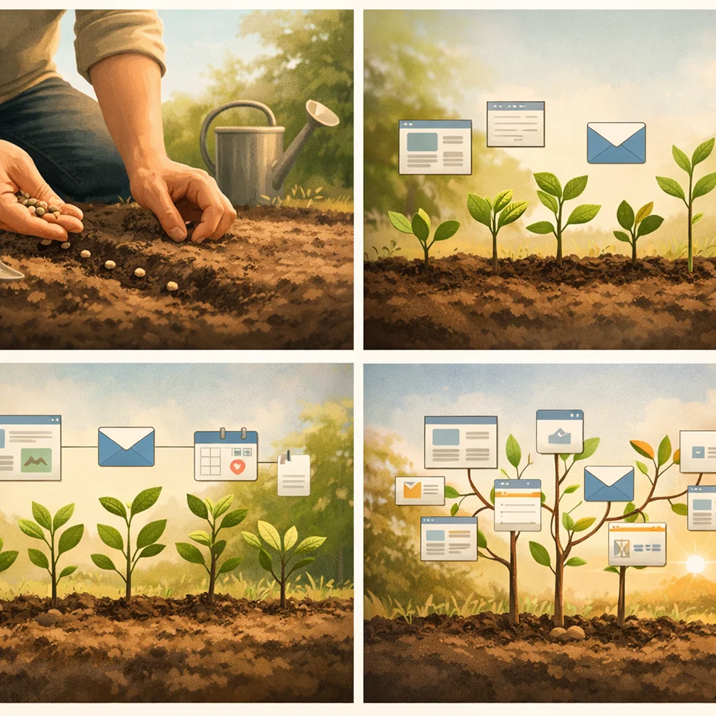
Affiliate marketing works on a delayed reward system. The effort you put in today rarely pays you today. It compounds quietly, then suddenly becomes visible.
Let’s unpack what that really looks like in real life.
Why Affiliate Marketing Feels Slow at First
Affiliate marketing is not a single action business. It is a system business.
You are building assets that continue to work after the initial effort is done. Content, email lists, relationships, trust, and visibility all take time to form.
In the early days, it feels like nothing is happening because most of the work is invisible.
You might publish content that no one reads yet.
You might build an email list that grows slowly at first.
You might promote offers and see no immediate results.
This does not mean it is not working. It means the system is still assembling.
The Three Phases Most Affiliates Go Through
Almost everyone who sticks with affiliate marketing long enough goes through the same three phases.
Phase 1: Setup and Confusion
This phase usually lasts the first 30 to 60 days.
You are learning terminology, tools, platforms, and processes. You are setting up email systems, writing content, and testing traffic sources.
Nothing feels smooth yet. Everything takes longer than expected. You question whether you are doing it right.
This is where many people quit because they expect feedback too early.
Phase 2: Signals Without Consistency
This phase often shows up between months two and four.
You start seeing small signs of life.
A click here.
An email reply.
A commission that surprises you.
The problem is that it feels random. You cannot repeat it reliably yet. This creates emotional ups and downs.
This phase is where learning accelerates. You begin to understand what actually moves people instead of what sounds good in theory.
Phase 3: Predictable Momentum
This phase usually begins somewhere between month four and month eight for people who stay consistent.
Traffic becomes more stable. Email opens and clicks follow patterns. Sales still fluctuate, but they no longer feel mysterious.
You start trusting the system instead of hoping for miracles.
This is where affiliate marketing begins to feel real.
Why Timelines Vary So Much
You will see people online claiming they made money in days or weeks. Sometimes that is true. Often it is incomplete context.
Here are the biggest factors that affect how long affiliate marketing takes to work.
Starting Skill Level
Someone with writing, marketing, or technical experience will move faster early on. That does not mean beginners cannot succeed. It means they must learn those skills while building.
Time Available
Someone working one focused hour a day will outperform someone working five distracted hours a week.
Consistency beats intensity.
Traffic Strategy
People who focus only on social platforms often burn out faster. Platforms change, accounts get limited, and attention disappears quickly.
People who build email lists and content libraries usually see slower starts but stronger long term growth.
Expectations and Mindset
The biggest factor is psychological.
People who expect quick results feel disappointed early. People who expect delayed results feel encouraged when small progress appears.
Affiliate marketing rewards patience more than talent.
What “Working” Actually Means
Another problem is that people define success too narrowly.
Affiliate marketing does not suddenly flip from zero to full time income.
It works in layers.
First, people click.
Then they subscribe.
Then they reply.
Then they trust.
Then they buy.
If you only measure the last step, you miss all the progress leading up to it.
A growing email list is progress.
Consistent traffic is progress.
People replying to your emails is progress.
Sales are the result of those things, not the starting point.
The Role of Systems Over Hustle
Many people delay success because they focus on activity instead of systems.
Posting randomly.
Chasing new offers weekly.
Starting over constantly.
Affiliate marketing rewards people who simplify.
One offer.
One list.
One traffic strategy.
One follow up system.
When those elements work together, time becomes your ally instead of your enemy.
The Truth About “Fast” Results
Yes, some people get early commissions.
Those commissions often disappear if the system is not built underneath them.
Fast results without systems create stress. Sustainable results create calm.
The goal is not speed. The goal is repeatability.
A More Useful Question to Ask
Instead of asking how long affiliate marketing takes to work, ask this instead.
Am I building something today that can still work six months from now?
If the answer is yes, you are on the right path even if the results feel slow.
If the answer is no, speed will not save you.
What to Do While You Wait for Results
Waiting does not mean doing nothing.
While the system matures, focus on:
- Publishing helpful content regularly
- Growing your email list intentionally
- Learning what your audience actually responds to
- Improving clarity rather than chasing complexity
These actions shorten the timeline without creating burnout.
Here’s the Deal
Affiliate marketing does not reward urgency. It rewards alignment.
When your content, offers, email system, and expectations line up, results follow naturally.
It does not happen overnight. It does happen if you stay consistent long enough to let the system work.
Get the 7-day Affiliate Jumpstart plan here: 7-day Affiliate Jumpstart plan