When you first step into affiliate marketing, one of the biggest questions you face is this:
Should I focus on SEO or social media for traffic?
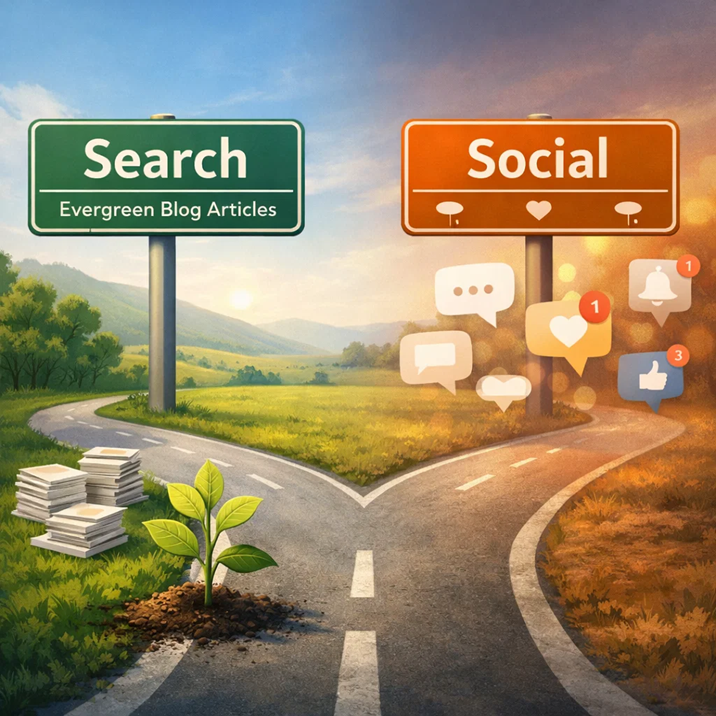
It feels like a fork in the road. On one side, search engine optimization promises long term, steady traffic. On the other side, social media offers instant exposure and the possibility of going viral.
Both can work. Both have created successful businesses. But early on, the better choice is usually not about what is trendier. It is about what is sustainable for you.
Let’s break this down in a practical way.
What SEO Really Means for a Beginner
SEO, at its core, means creating content that answers specific questions people are already typing into search engines.
It might be:
- What is affiliate marketing?
- How long does affiliate marketing take?
- How do affiliate links work?
- Best email tools for beginners
When someone searches for those topics and finds your article, that is search traffic.
The upside of SEO early on is simple:
You are meeting people who are already looking for answers.
You are not interrupting them. You are helping them.
But SEO takes patience. You might publish an article today and see very little traffic for weeks or even months. That can feel discouraging if you expect immediate results.
The key with SEO is consistency. If you publish helpful, focused content week after week, it begins to compound. One article ranks. Then another. Then older ones start picking up traffic as your site gains authority.
It is slower at the beginning. It is more stable later.
What Social Traffic Really Means
Social traffic is different. It is faster. It is more reactive.
You create a post, a reel, a short video, or a thread. You share it. If people engage with it, it spreads. If they do not, it disappears.
The benefit is speed. You can get views today.
The downside is volatility. Tomorrow that same post might get almost no reach. Platforms change rules. Algorithms shift. What worked last month might not work now.
For beginners, social traffic can feel exciting. You see numbers move. You see likes and comments. That feedback loop feels motivating.
But there is a hidden trap.
You do not own that traffic.
If your account gets restricted, shadowed, or simply loses reach, you are starting from zero again.
The Early Stage Reality
When you are in your first 90 days, your biggest job is not chasing traffic. It is building foundations.
You need:
- A clear niche
- A simple content strategy
- An email capture system
- One or two solid affiliate offers
If you pour all your energy into social media without capturing emails, you are renting attention. The moment you stop posting, the traffic stops.
If you build content around SEO and pair it with email capture, you are building an asset.
That does not mean ignore social media entirely. It means use it strategically.
For example:
- Write one blog post per week targeting a clear search query.
- Share that article on social platforms.
- Always send traffic to an opt in page first.
- Build your list.
Now your social traffic feeds your SEO content. And your SEO content feeds your email list.
That is leverage.
Which One Makes More Sense Early On?
If you force me to choose one for most beginners, I lean toward SEO paired with email.
Here is why:
SEO teaches discipline.
It forces you to think about real questions.
It builds long term assets.
It reduces dependence on platforms.
Social media teaches speed and communication, which are valuable skills. But it can also distract you into chasing trends instead of building systems.
If your time is limited, which for most people it is, building searchable content that works for you while you sleep makes more sense.
One solid article can bring traffic for years.
One social post might live for 24 hours.
The Compounding Effect
Think about it like planting seeds.
With SEO, you plant seeds. At first, nothing happens. Then small shoots appear. Eventually, you have multiple plants growing at once.
With social media, you light matches. Some burn brightly. Some fizzle out. You have to keep lighting new ones.
There is nothing wrong with lighting matches. Just do not forget to plant seeds.
The most stable affiliate businesses tend to use both, but they lean heavily on systems that compound.
That usually means:
- Evergreen content
- Search traffic
- Email follow up
- Simple funnels
The Emotional Side of This Decision
Early on, impatience is the biggest enemy.
You want proof. You want clicks. You want something to validate the effort.
Social media gives you faster emotional feedback.
SEO gives you slower financial feedback.
If you can tolerate delayed gratification, SEO builds something more durable.
If you need fast engagement to stay motivated, you can use social, but keep it tied to a bigger plan.
The mistake most beginners make is jumping between the two constantly. One week SEO. Next week TikTok. Then Pinterest. Then YouTube. Then back to blogging.
Pick one core strategy for 90 days.
Execute it consistently.
Then layer in the second.
A Balanced Approach That Actually Works
Here is a practical early game plan:
- Create one focused blog post per week around a clear search question.
- Optimize it around one key topic.
- Include an opt in for your free guide.
- Share the article across social platforms without obsessing over engagement.
- Send one email per week to your list.
This builds:
- Authority
- Search presence
- Email depth
- Communication skills
And it does so without overwhelming you.
Over time, your search traffic grows. Your email list grows. Your confidence grows.
That is when social media becomes an amplifier instead of a lifeline.
Here’s the Deal
SEO vs social traffic is not a war.
It is a sequencing question.
Early on, focus on building assets you own. Content and email fall into that category.
Use social media as distribution, not as your foundation.
If you get this right in your first few months, you will not be scrambling for traffic a year from now. You will be improving systems that are already working.
If you want a simple structure for getting started, including how to set up your foundation properly, you can follow the same framework I outline in my guide.