Affiliate marketing is one of those terms that gets thrown around a lot online, usually alongside big promises, flashy screenshots, and unrealistic timelines. That alone makes it confusing for people who are genuinely curious and just want an honest explanation.
So let’s slow it down and break it apart in plain language.
Affiliate marketing is simply a way to earn commissions by recommending products or services you believe are useful. You do not create the product. You do not handle customer support. You do not process payments. Your role is to connect people with solutions and earn a referral fee when they take action.
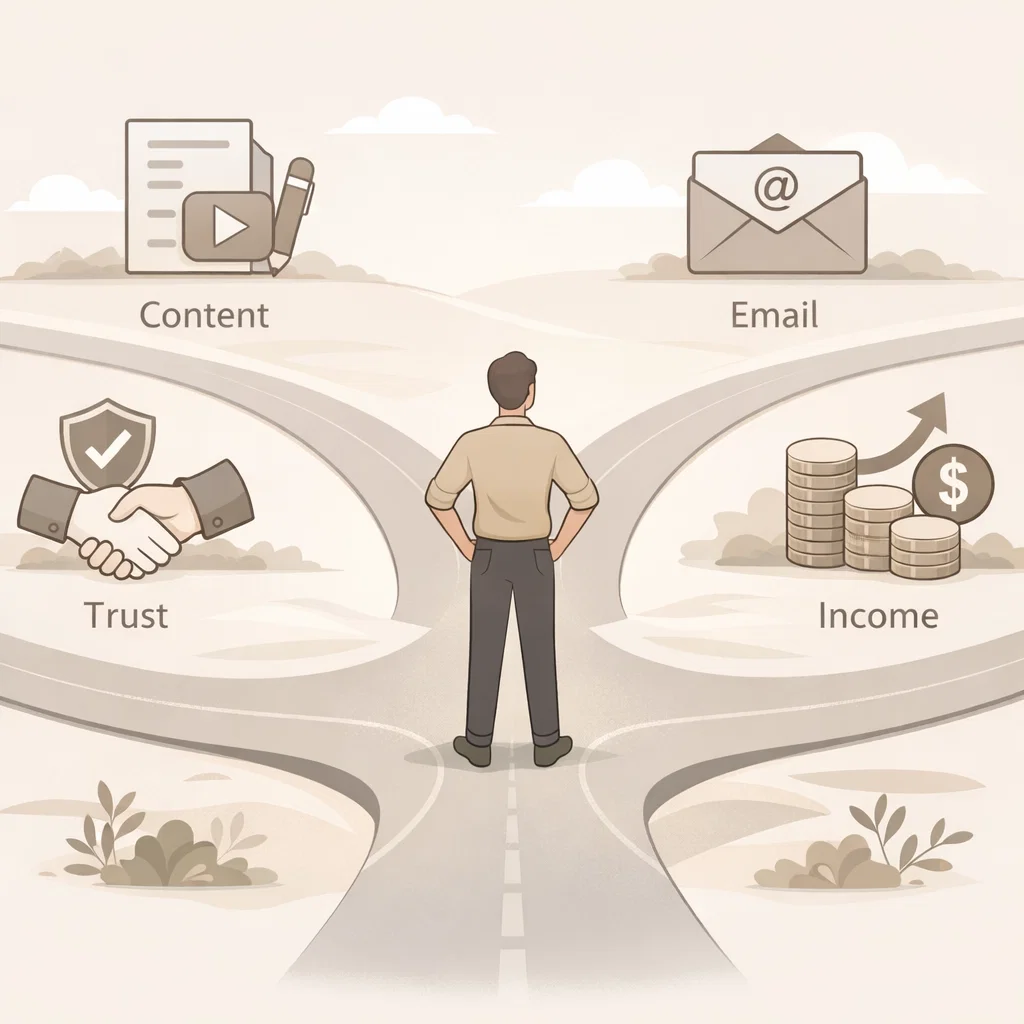
At its core, affiliate marketing is about trust, timing, and relevance.
The Simple Definition of Affiliate Marketing
Affiliate marketing is a partnership between three parties:
The company that owns the product
The affiliate who promotes it
The customer who makes a purchase
When someone clicks your unique referral link and completes an action, usually a purchase or signup, the company tracks that activity and pays you a commission.
That is it. No magic. No tricks.
The confusion usually comes from how this simple concept gets wrapped in hype and shortcuts.
How Affiliate Marketing Actually Works Step by Step
To understand how it works in real life, it helps to walk through a basic example.
First, you join an affiliate program. This could be a software platform, an online course, a digital service, or even physical products sold through marketplaces.
Once approved, you receive a unique affiliate link. That link tracks referrals back to you.
Next, you share helpful content. This could be a blog post, a video, an email, a social media post, or a resource page. The goal is not to sell aggressively but to educate, explain, or solve a problem.
When someone clicks your link and takes the required action, the tracking system records it. If the terms are met, you earn a commission.
This can happen once or repeatedly, depending on whether the product pays one time or recurring commissions.
Why Affiliate Marketing Appeals to Beginners
Affiliate marketing is attractive because it removes many barriers that stop people from starting an online business.
You do not need to create a product
You do not need customer support staff
You do not need inventory or shipping
You can start with free tools
For beginners, this makes affiliate marketing one of the lowest risk ways to learn how online income actually works.
It also teaches valuable skills like content creation, audience building, and digital communication. Even if someone never becomes a full time affiliate, the skills carry over into other online opportunities.
The Role of Content in Affiliate Marketing
Content is where most people either succeed or struggle.
Affiliate marketing does not work when links are thrown around randomly. People click when they understand why something matters to them.
Good affiliate content usually does one or more of the following:
Explains a problem clearly
Shares personal experience or observations
Compares options honestly
Shows how something fits into a bigger system
This is why blogs, emails, and educational videos work so well. They create context before the click.
Traffic Comes Before Commissions
One of the biggest misconceptions is that affiliate marketing is about links.
It is not. It is about attention.
No traffic means no clicks. No clicks means no commissions.
Traffic can come from many sources. Search engines, social media, email lists, communities, or paid advertising. The method matters less than consistency.
What matters most is that traffic lands somewhere useful, not directly on a sales page with no explanation. This is why many affiliates use blogs, resource hubs, or simple opt in pages to warm people up before recommending anything.
Why Email Lists Matter in Affiliate Marketing
Email lists give you control.
Unlike social media platforms, email allows you to follow up, educate, and build relationships over time. It also lets you recommend products naturally instead of pushing everything in one moment.
Many successful affiliates focus on building a list first, then introducing offers gradually. This approach reduces pressure and increases long term results.
Can Affiliate Marketing Be Passive?
Affiliate marketing can become semi passive over time, but it is not passive at the beginning.
In the early stages, effort is required. Content needs to be created. Systems need to be connected. Traffic sources need to be tested.
Once those systems are in place, content can continue to work for you long after it is published. That is where the passive reputation comes from.
Think of affiliate marketing as planting seeds. You do the work upfront, then allow the results to compound.
Common Mistakes Beginners Make
Many beginners fail because they focus on the wrong things first.
They chase high commissions instead of learning fundamentals
They promote too many offers at once
They skip audience building
They expect results without consistency
Affiliate marketing rewards patience and clarity. It punishes shortcuts.
Starting with one platform, one traffic method, and one core offer is often the smartest move.
Is Affiliate Marketing Still Worth It?
Affiliate marketing is still very much alive, but it has matured.
The days of copying and pasting links everywhere are gone. What works now is education, transparency, and trust.
People buy from those who help them understand their choices, not those who pressure them.
If you are willing to learn, show up consistently, and focus on value first, affiliate marketing remains a legitimate way to build income online.
Looking to start your own affiliate marketing journey with structure instead of guesswork? Everything works better with a plan.
Get the 7-day Affiliate Jumpstart plan here:
7-day Affiliate Jumpstart plan