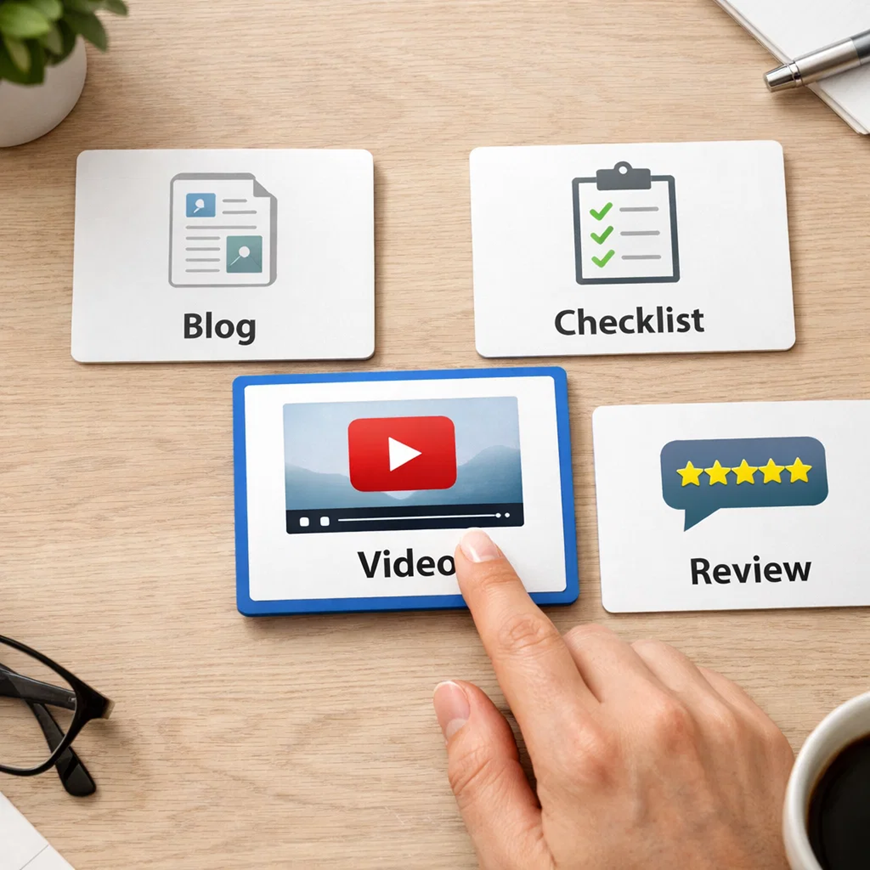
What type of content actually converts?
Not just gets views.
Not just gets clicks.
But leads to real commissions.
It’s an important distinction.
Because a lot of content looks good on the surface. It gets attention. It gets engagement.
But it does not convert.
And that’s where most people get stuck.
The truth is, conversion comes down to intent, trust, and timing.
Let’s break that down in a way that actually helps you create better content.
Not All Content Is Meant to Convert
One of the biggest mistakes beginners make is expecting every piece of content to generate sales.
That is not how it works.
Some content is designed to attract attention.
Some content builds trust.
Some content converts.
If you try to force every post to sell, it usually backfires.
People can feel it.
Instead, think of your content as a journey.
And conversion content sits near the end of that journey.
High Intent Content Converts Best
The content that converts the most is content where the reader already wants a solution.
They are not browsing.
They are searching.
Examples include:
- Product reviews
- Comparisons
- “Best tools for…” posts
- Tutorials with specific outcomes
Someone reading “best email marketing tools for beginners” is much closer to buying than someone reading “what is email marketing.”
That difference matters.
A lot.
Reviews Build Trust and Reduce Doubt
Product reviews are one of the strongest types of converting content.
Why?
Because people are looking for reassurance.
They want to know:
Does this actually work?
Is it worth the money?
Will it help me?
When you answer those questions honestly, you remove friction.
And when friction is removed, conversion becomes easier.
The key is honesty.
If your review feels like a sales pitch, it loses impact.
If it feels like a real experience, it builds trust.
Comparisons Help People Decide
Sometimes people already know they want a solution.
They just do not know which one to choose.
That is where comparison content works extremely well.
For example:
“Tool A vs Tool B”
“Best platforms for beginners”
This type of content helps people make decisions faster.
And when you guide that decision clearly, conversions follow naturally.
Tutorials That Lead to Tools
Tutorials are powerful because they provide immediate value.
They show someone how to do something.
But they also create an opportunity.
If the tutorial requires a tool, and you recommend that tool naturally, it becomes a soft conversion.
For example:
“How to build an email list from scratch”
Within that, you mention the platform you use.
Not aggressively. Just naturally.
This works because the recommendation feels relevant.
Not forced.
Story-Based Content Builds Connection
Not all converting content is technical.
Some of it is emotional.
Story-based content works because it builds connection.
When you share your experience, your struggles, and your progress, people relate to it.
They begin to trust you.
And when trust is built, your recommendations carry more weight.
This type of content does not always convert immediately.
But it increases conversions over time.
Problem-Solution Content Works Consistently
One of the simplest formats is also one of the most effective.
Identify a problem.
Provide a solution.
For example:
“Why your email list isn’t growing and how to fix it”
If your solution includes a tool, course, or system, it fits naturally into the content.
This works because it meets people where they are.
They have a problem.
You help solve it.
Content That Feels Natural Converts Better
The biggest factor in conversion is not the format.
It is how the content feels.
If it feels forced, people resist.
If it feels helpful, people respond.
That is why subtle recommendations often outperform aggressive selling.
You are not trying to convince people.
You are helping them make a decision.
Timing Matters More Than You Think
Even the best content will not convert if the timing is wrong.
Someone who is just learning will not buy immediately.
Someone who is ready will.
That is why having a mix of content is important.
Some content attracts beginners.
Some content nurtures them.
Some content converts when they are ready.
Over time, this creates a system.
Keep It Simple and Focused
You do not need dozens of content types.
You need a few that work well.
Start with:
- One or two tutorials
- One review
- One comparison
- One story-based piece
This gives you a balanced approach.
And from there, you can refine what works best for your audience.
The Bigger Picture
Affiliate marketing is not about pushing links.
It is about helping people make decisions.
When your content does that well, conversions follow naturally.
It becomes less about selling.
And more about guiding.
Final Thought
If you want content that converts, focus on intent.
Help people who are already looking for solutions.
Build trust with honesty.
And keep your recommendations natural.
That is what turns content into income.Get the 7-day Affiliate Jumpstart plan here: